Heat press printing is a flexible way to brand T-shirts, jerseys, caps and bags, especially for small runs, names, numbers and full-colour designs. This heat press printing guide explains the main methods (HTV, transfers and sublimation), when to use each, and how to care for the finished garments.
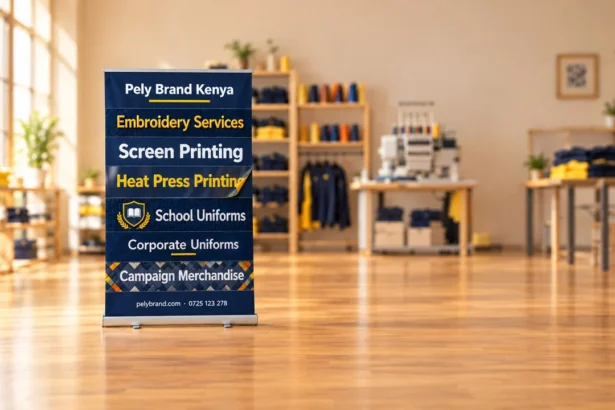
Pely Brand Kenya offers heat press printing for customers across Kenya, from our offices and workshop in Nairobi. There is no minimum order. Request a quote.
Use this heat press printing guide to pick between HTV, DTF and sublimation before you order.
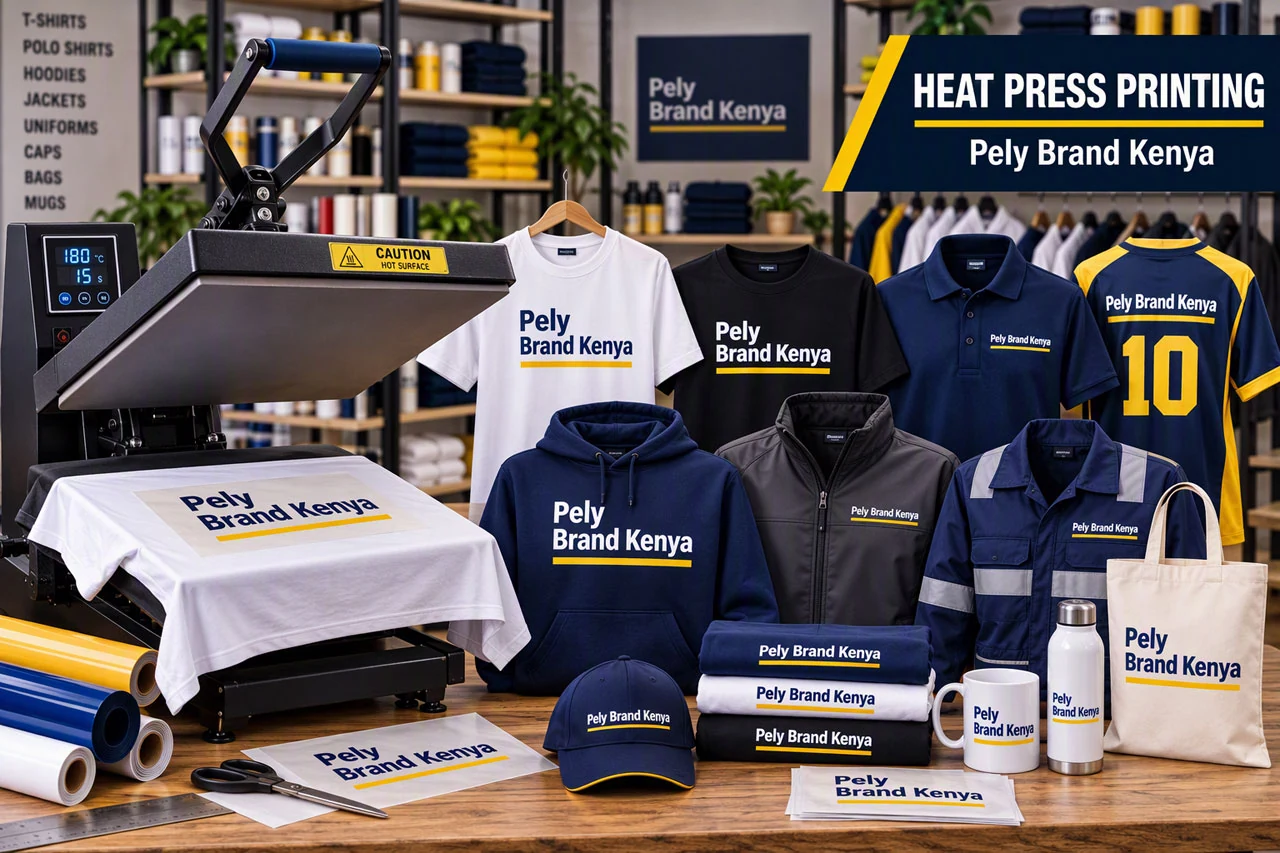
How heat press printing works
- The design is prepared and made into a transfer, either cut from vinyl or printed onto film or paper.
- The garment is placed on the press and positioned.
- Heat and pressure are applied for the right time and temperature for the material.
- The carrier sheet is peeled away, leaving the design on the fabric.
The main heat press methods compared
| Method | What it is | Best for | Things to know |
|---|---|---|---|
| HTV (heat transfer vinyl) | Designs cut from coloured vinyl sheets | Names, numbers, logos, simple designs, small runs | Best for solid colours; layering multiple colours adds work |
| DTF (direct to film) | Full-colour design printed onto film and pressed on | Detailed or multi-colour artwork on many fabrics | Good for photographic or gradient designs |
| Sublimation | Special ink turns into the fibres under heat | All-over and full-colour designs on light polyester | Works on polyester or polyester-coated items, and best on light colours |
Settings such as temperature and time vary by material, so a good printer follows the guidance for the specific vinyl, film or fabric.
When heat press is the right choice
- You need a small quantity.
- You need names or numbers on jerseys and team wear.
- Your design has many colours or fine detail.
- You want personalised items with different names or details.
For large quantities of the same design, screen printing is often more economical. See our guide to screen printing T-shirts, or the comparison of embroidery vs screen printing vs heat press.
What affects the cost
- Quantity
- Method (HTV, DTF or sublimation)
- Size and number of placements
- Number of colours and complexity of the design
- Garment type
- Deadline
Preparing your artwork
- Send a vector file or a high-resolution image.
- Tell us the size and where the design goes on the garment.
- For names and numbers, send a list with sizes and positions.
- Include the garment colour, because it affects method choice.
Caring for heat pressed garments
- Turn the garment inside out before washing.
- Wash in cool or warm water and avoid harsh bleach.
- Do not iron directly on the design.
- Follow the care label.
Common mistakes to avoid
- Choosing heat press for a very large bulk run without comparing costs.
- Using sublimation on dark or non-polyester fabrics.
- Sending a low-quality image.
- Not confirming size and placement.
How to use this heat press printing guide
This heat press printing guide is meant to help you match the method to your design, garment and quantity. Keep this heat press printing guide handy when you brief your printer: note the garment fabric and colour, the design size and the quantity. The right choice from this heat press printing guide saves money and gives a longer-lasting result. For background on the process, see this overview of the heat press.
Heat press printing guide: frequently asked questions
What is heat press printing?
What is the difference between HTV, DTF and sublimation?
Is heat press printing good for small orders?
Is there a minimum order for heat press printing?
How do I wash heat pressed garments?
Which is more durable, heat press or screen printing?
What artwork do you need for heat press printing?
Ready to start? Request a quote or WhatsApp us on +254 725 123278 with your design and quantity. We reply within 2 hours.