Choosing between embroidery, screen printing and heat press is the most common question we hear from schools, companies, churches and teams. The honest answer is that no single method is best for everything. The right choice depends on four things: the garment, the quantity, the design and how long the item has to last.
This guide compares the three methods side by side, shows which suits which garment, and ends with a simple decision checklist. If you would rather skip the reading, send us your logo and what you need and we will recommend a method for each item.
This embroidery vs screen printing vs heat press comparison shows which method suits each garment, quantity and budget, so you can decide before you order.
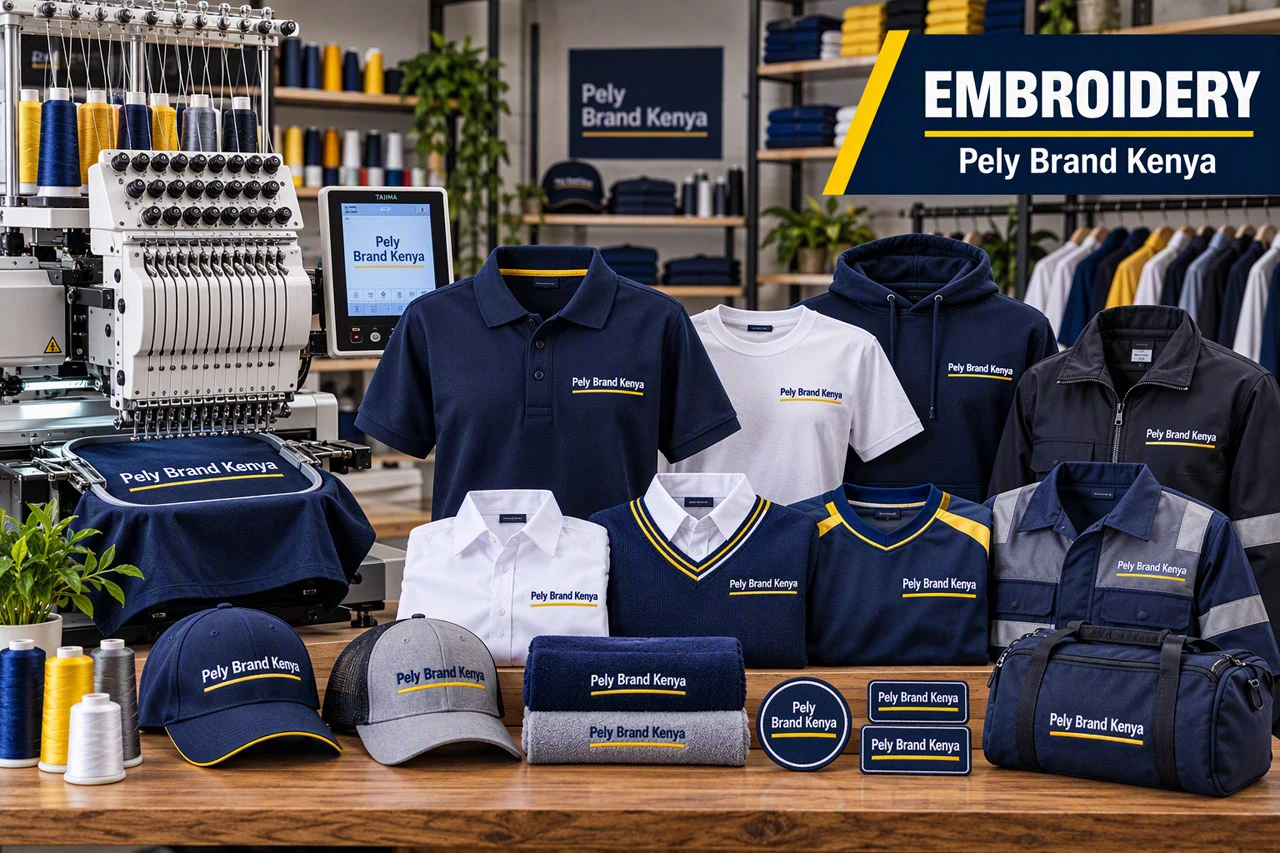
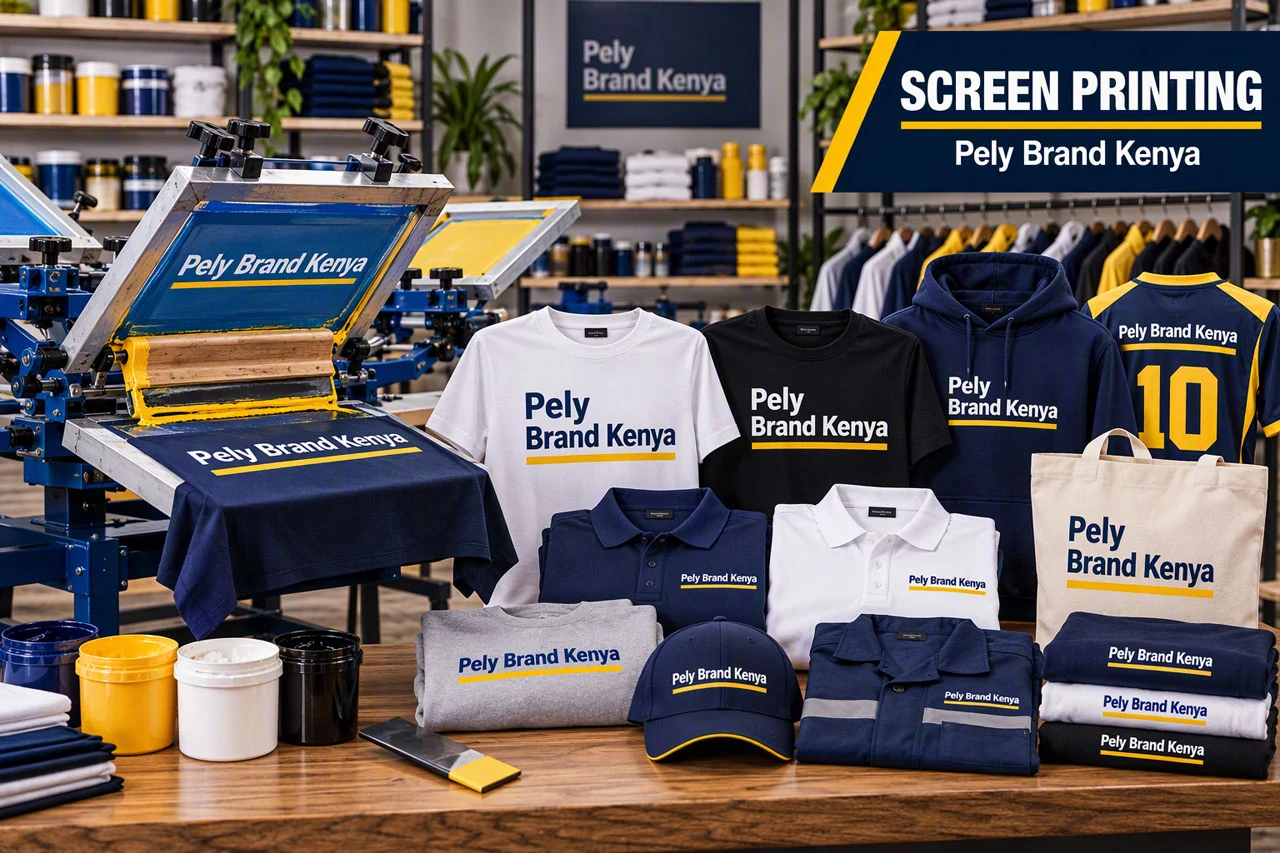
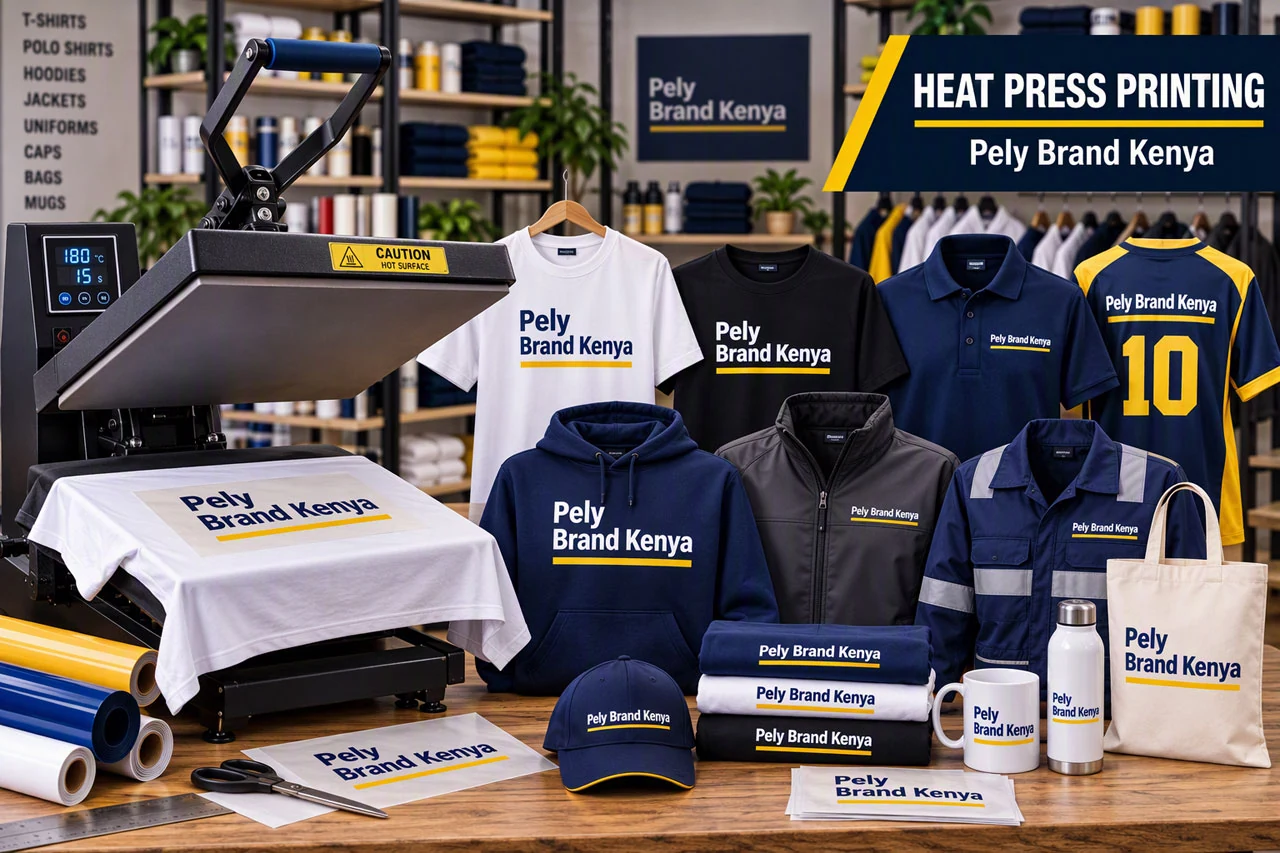
The quick answer
- Embroidery: best for polo shirts, caps, jackets and uniforms where you want a premium look that lasts for years.
- Screen printing: best for large quantities of the same design in a few bold colours, especially on cotton T-shirts.
- Heat press: best for small runs, names and numbers, and designs with many colours or fine detail.
Embroidery vs screen printing vs heat press: comparison table
| Embroidery | Screen printing | Heat press | |
|---|---|---|---|
| Best for | Polos, caps, jackets, uniforms | Bulk T-shirts, hoodies, event wear | Small runs, names and numbers, photos |
| Order size | One piece to large orders | Most economical for larger runs | Ideal for one piece to small and medium runs |
| Colours | Limited by thread colours; cost follows stitch count | Each colour needs its own screen, so fewer colours is cheaper | Full colour with no extra screen cost |
| Fine detail and photos | Poor: small text and gradients do not stitch well | Limited for detail with many colours | Excellent |
| Look and feel | Raised, textured, premium | Ink sits in or on the fabric; soft on cotton | Smooth surface layer |
| Durability | Highest | High on cotton when cured properly | Good with correct application and care |
| Set-up | Logo must be digitised once | Screens made for each colour | Very little |
How each method works
Embroidery
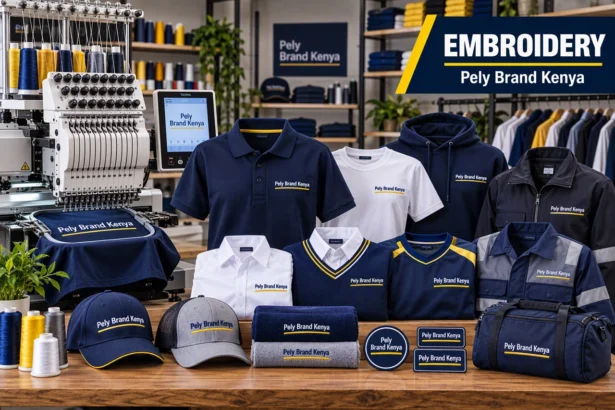
Your logo is digitised, which means it is converted into a stitch file that tells the machine where to place each stitch and which thread colour to use. The machine then sews your logo into the garment. Because it is thread, embroidery has a raised, premium finish and does not crack or peel. Its limits are fine detail: very small text, thin lines and gradients do not stitch cleanly, and very light or stretchy fabrics can pucker. See our guide to logo digitizing for embroidery for how to prepare your file, and our embroidery services page for what we embroider.
Screen printing
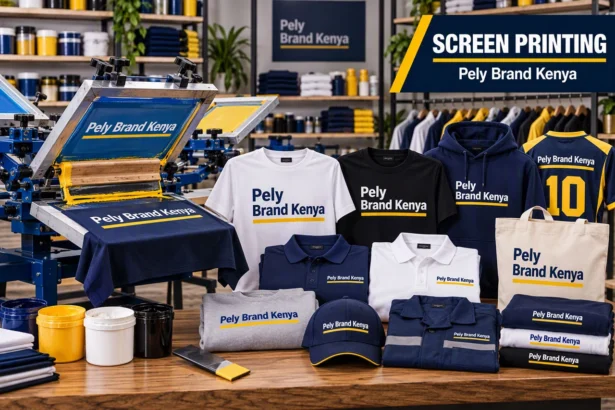
Ink is pushed through a stencil (a screen) onto the garment, one colour at a time, and then cured so it withstands washing. Every colour in your design needs its own screen, so the set-up is done once and then repeated quickly across the whole order. That is why screen printing is so efficient for large quantities of the same design. Read more in our screen printing T-shirts guide or see our screen printing page.
Heat press printing
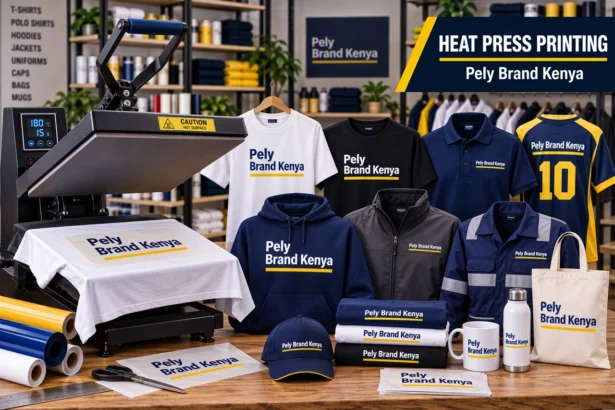
Heat and pressure apply a design to the garment. Common types include heat transfer vinyl (cut vinyl, ideal for names, numbers and lettering), full-colour transfers (ideal for detailed artwork and photos) and sublimation (dye pressed into light polyester items). There is almost no set-up, so it suits single pieces and small batches. Our heat press printing guide explains the types in detail, and our heat press printing page lists what we press.
Which method for which garment?
| Garment | Usually best | Why |
|---|---|---|
| Polo shirts | Embroidery | Premium look, small chest logo, lasts through washing |
| Caps | Embroidery | Structured fabric suits stitching |
| Jackets, fleeces, sweaters | Embroidery | Thick fabric holds stitches well |
| Cotton T-shirts in bulk | Screen printing | Cost per piece falls as quantity rises |
| Hoodies | Screen printing or embroidery | Bold print for events, embroidery for staff wear |
| Sports jerseys with names and numbers | Heat press | Personalisation without screens |
| Polyester sportswear | Heat press (sublimation or transfers) | Suited to synthetic fabrics |
| Aprons and workwear | Screen printing or embroidery | Depends on fabric and quantity |
| Tote bags and mugs | Screen printing or heat press | Depends on quantity and number of colours |
Which method for which quantity?
As a rule of thumb, heat press is the most economical for one piece to a small batch, screen printing becomes the most economical as quantities grow, and embroidery is priced by the logo rather than the order, so it suits any quantity of small logos. There is no fixed line between them, because it also depends on your number of colours and the garment. At Pely Brand Kenya there is no minimum order for any method, so we simply recommend the one that gives you the best result for your quantity.
What affects the price?
We quote every job individually. The factors that move the price are:
- Quantity: screen printing and embroidery set-up is shared across more garments in bigger orders.
- Number of colours: more colours mean more screens for printing and more thread changes for embroidery.
- Logo size and detail: embroidery is priced by stitch count, so larger and denser logos cost more.
- Print positions: chest, back and sleeve each count separately.
- The garment itself: the blank garment is often as significant a cost as the decoration.
- Deadline: tight deadlines need planning, so tell us early.
Can you combine methods?
Yes, and many orders do. A typical staff uniform order embroiders the logo on polo shirts and caps, screen prints T-shirts for field staff, and uses heat press for names and job titles. On a team order you might embroider the badge and heat press each player’s name and number. Matching the method to each garment gives better results than forcing one method on everything.
Artwork checklist before you ask for a quote
- Send your logo as a vector file (AI, EPS, SVG or PDF) if you have one. A clear PNG or JPG is a good start.
- Tell us your brand colours so we can match thread or ink as closely as possible.
- Say where each design should go (chest, back, sleeve, cap front) and roughly how big.
- Give your quantity, sizes if known and your deadline.
Five questions to decide in two minutes
- What garment is it? Polos, caps and jackets point to embroidery; T-shirts point to printing.
- How many do you need? A few points to heat press; many points to screen printing.
- How many colours does the design have? One to three colours suits screen printing; many colours or photos suit heat press.
- Will it be washed often? For daily-wear uniforms, embroidery lasts longest.
- Does each garment need a different name or number? Use heat press.
Common mistakes to avoid
- Choosing embroidery for a design with tiny text or gradients, which will blur in thread.
- Choosing screen printing for a handful of shirts with many colours, which makes the set-up poor value.
- Sending a low-resolution screenshot instead of a logo file.
- Forgetting to mention the fabric, since polyester and stretch fabrics need specific methods.
- Leaving the deadline until the last week.
When you compare embroidery vs screen printing vs heat press, also think about reorders: embroidery vs screen printing vs heat press each handle repeat orders differently, because embroidery needs a stitch file, screen printing needs screens, and heat press needs only the artwork file.
Embroidery vs screen printing vs heat press: the short answer
Every embroidery vs screen printing vs heat press decision comes down to the garment, the quantity, the design and how long the branding must last. In the embroidery vs screen printing vs heat press debate there is no single winner: embroidery suits polos and uniforms, screen printing suits larger T-shirt orders, and heat press suits small runs, names and numbers. If you are still unsure after reading this embroidery vs screen printing vs heat press comparison, send us your garments and logo and we will recommend a method. For more background, see this overview of screen printing.
Embroidery vs screen printing vs heat press: frequently asked questions
Which is cheaper: embroidery, screen printing or heat press?
Which method lasts the longest?
Which method is best for school uniforms?
Which method is best for company staff uniforms?
Can I print or embroider a single item?
Can I combine two methods on one garment?
What file should I send for a quote?
Not sure which method is right for your order? Request a quote or WhatsApp us on +254 725 123278. Tell us the garments, quantity and deadline and we will recommend the best method. We reply within 2 hours.