Staff uniforms are one of the most visible parts of your brand. Customers notice them in the first few seconds, and employees wear them every working day. Knowing how to choose corporate uniforms means balancing look, comfort, durability and cost, for every role and every branch. This guide covers the decisions in order so you get it right the first time.
Pely Brand Kenya supplies and brands corporate uniforms for companies across Kenya, from our offices and workshop in Nairobi. There is no minimum order, and every job is quoted individually. Request a quote.
If you are wondering how to choose corporate uniforms that look good, last and suit every role, work through the steps below in order.
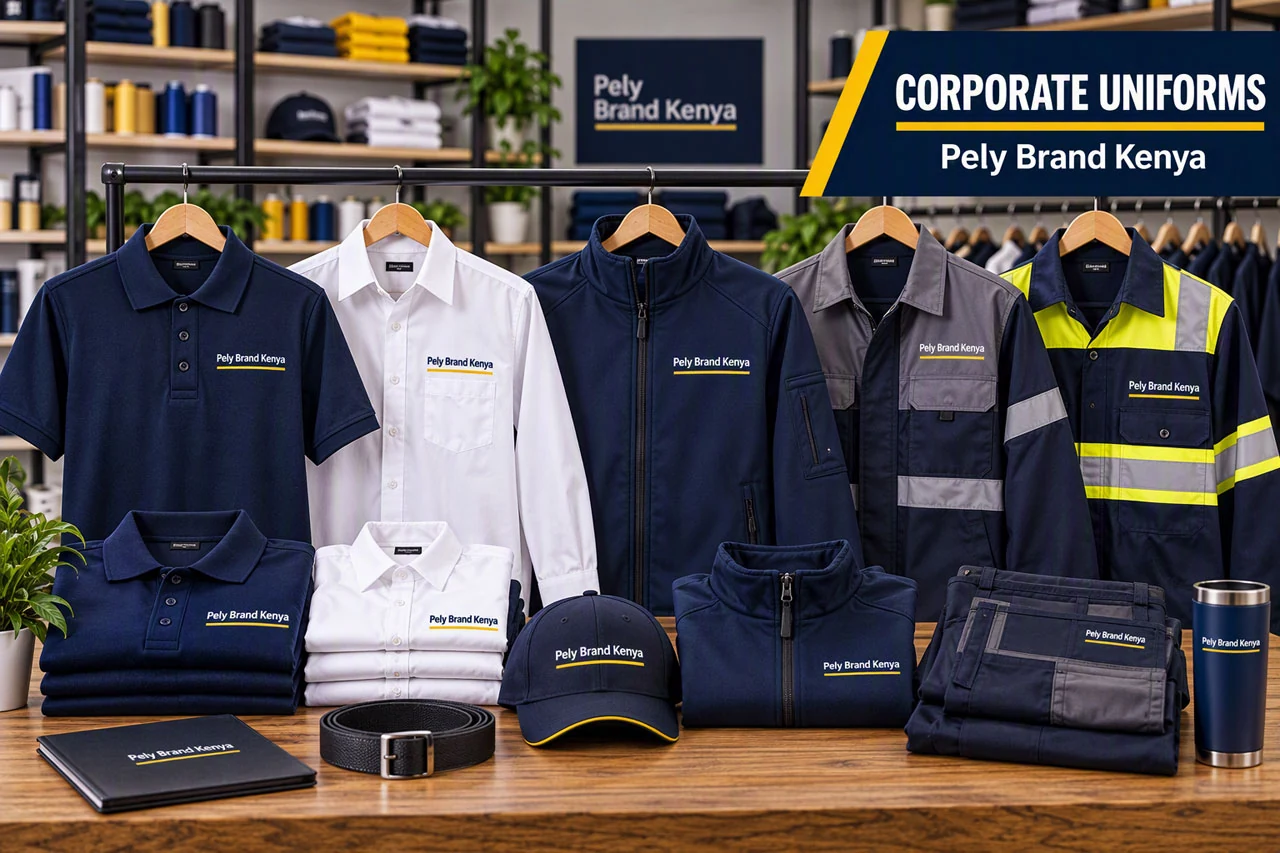
How to choose corporate uniforms: the short version
- Decide what the uniform must do for each role.
- Pick garments to suit the work and the climate.
- Choose fabric for comfort and durability.
- Pick colours that match your brand and hide wear.
- Choose the right branding method for each garment.
- Plan sizes by role and branch.
- Approve a sample before the full order.
- Keep brand specs on file for reorders.
Step 1: Decide what the uniform must do
Start with the job, not the garment. A receptionist, a driver, a kitchen team and a warehouse crew all need different things. Ask three questions for each role: Does the uniform need to look smart or be hard-wearing? Will staff be indoors, outdoors or both? How often will it be washed?
Step 2: Match garments to roles
| Role | Typical garments | Common branding |
|---|---|---|
| Front office and reception | Shirts, blouses, blazers, tunics | Embroidered logo, name tag |
| Sales and field teams | Polo shirts, jackets, caps | Embroidered logo |
| Operations and warehouse | Overalls, work shirts, trousers, reflective vests | Embroidery or print |
| Hospitality and kitchen | Chef jackets, aprons, waiter shirts | Embroidered logo |
| Events and promotions | T-shirts, caps, bibs | Screen printing or heat press |
Step 3: Choose fabric for comfort and durability
- Poly-cotton blends: durable, hold their shape and are easy to care for. A common choice for shirts, polos and workwear.
- Cotton: breathable and comfortable in warm conditions, but can shrink and crease more.
- Drill and twill: heavier cotton or blended fabrics for overalls, trousers and work jackets.
- Polyester pique: a textured knit often used for polo shirts that need to keep their shape.
Ask for swatches or a sample garment, and wash it before you decide. A fabric that looks good on day one but fades or shrinks after a few washes is expensive to replace across a whole team.
Step 4: Choose colours carefully
Match your brand colours, but think practically. Very light colours show stains quickly, and very dark colours can show dust and fade. Make sure your logo is clearly visible against the garment colour. A logo that works on white may need a different version on navy or black.
Step 5: Choose the branding method
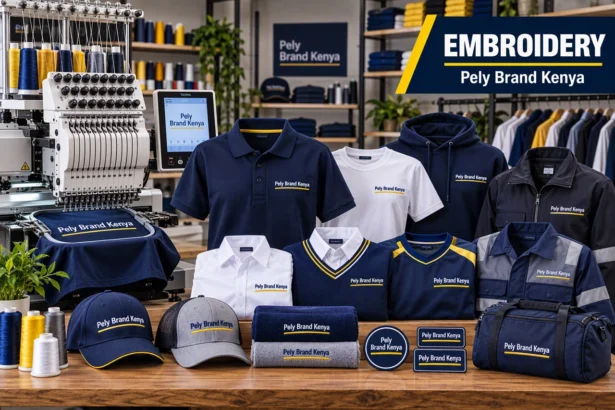
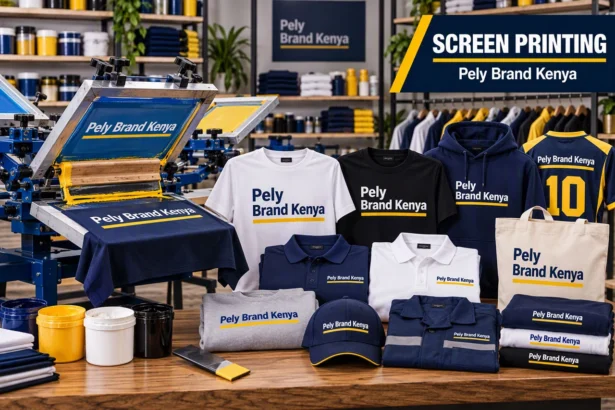
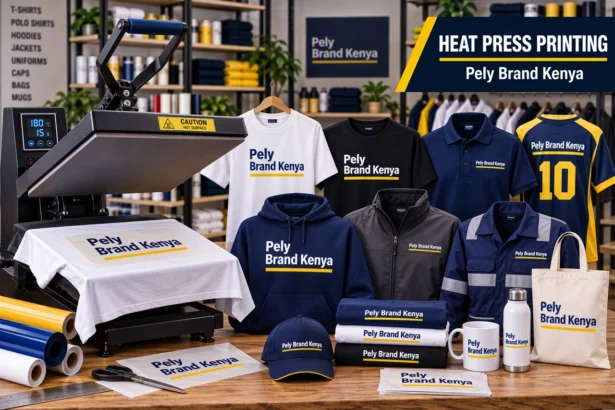
Embroidery gives a professional, lasting finish on polos, shirts, jackets and caps. Screen printing is economical for T-shirts in larger quantities, and heat press printing works well for names, numbers and small runs. Our guide to embroidery vs screen printing vs heat press compares them in detail. If your logo will be embroidered, read about logo digitizing for embroidery so you send the right files.
Step 6: Plan sizes by role and branch
- Collect sizes per person and per role, not just a headcount.
- Hold a fitting session with sample sizes if you can.
- Keep a size schedule for each branch.
- Allow a few spares for new staff and replacements.
- Consider men’s and women’s cuts where relevant.
Step 7: Approve a sample
For larger orders, ask for a sample before full production. Check the fabric, the fit, the logo placement, the colours and the quality of the stitching or print. Approve it in writing so everyone is working from the same reference.
Step 8: Keep brand specs on file
- Your approved logo file and colour references
- Placement for each garment
- The original order list and sizes
- Supplier contact and notes
With these on record, reorders match the first order and new staff are kitted out consistently.
Workwear versus safety clothing
Branded workwear shows who your staff are and helps your company look professional. It is not the same as certified personal protective equipment. If your staff work in conditions that need protective clothing, check the safety standards that apply to their work and choose certified items for that purpose.
Common mistakes to avoid
- Choosing garments before defining what each role needs.
- Ordering without checking a fabric sample.
- Sending a low-resolution logo.
- Not planning sizes for each branch.
- Skipping the sample approval.
- Forgetting to record brand specs for reorders.
How to choose corporate uniforms that last
Knowing how to choose corporate uniforms comes down to the role, the fabric, the colours and the branding method. When you decide how to choose corporate uniforms for a larger team, start with a sample, agree sizes by branch and keep your logo files on record. That way, how to choose corporate uniforms stops being a guess and becomes a repeatable process. For background reading, see this overview of workwear.
How to choose corporate uniforms: frequently asked questions
What is the best fabric for corporate uniforms in Kenya?
Should corporate uniforms be embroidered or printed?
How do we get sizes right for a whole team?
Is there a minimum order for corporate uniforms?
What do we need to send for a quote?
Are workwear uniforms the same as safety clothing?
How do we keep uniforms consistent when we reorder?
Ready to kit out your team? Request a quote or WhatsApp us on +254 725 123278 with your garment list and logo. We reply within 2 hours.